Healthcare Research Initiative’s Prashant Yadav Joins Sproxil’s Advisory Board

Leading Expert on Pharmaceutical and Healthcare Supply Chain Management in Emerging Markets Brings Expertise to Company’s Mission to Fight Counterfeit Products

Cambridge, MA, February 19, 2013 — Sproxil, a U.S.-based company that provides world-class brand protection in emerging markets through mobile phone technology, announces that Dr. Prashant Yadav, Senior Research Fellow and Director of Healthcare Research Initiative, has joined the company’s Board of Advisors. Yadav, an expert in pharmaceutical and healthcare supply chain management in emerging markets, was formerly a Professor of Supply Chain Management at the MIT-Zaragoza International Logistics Program and currently serves as an advisor for multiple organizations in the area of pharmaceutical supply chains.

“Counterfeit drugs hurt patients as well as good quality drug manufacturers,” states Yadav. “Drug regulatory authorities in emerging markets remain constrained in their ability to prevent and detect counterfeit products because it is quite a resource intensive operation…but Sproxil has created innovative technology that helps curb the issue.”

Sproxil’s Mobile Product Authentication™ (MPA™) solution allows consumers to verify the products they purchase are genuine by using a mobile phone and a simple, free text message. Using a scratch card method, similar to that used for replenishing cellular talk-time, users reveal a one-time-use code on drug packaging and text the code to a “911 for fake drugs” number which is identical on all cellular networks within a country. The solution has been shown to be the most secure and reliable available on the market. Both local companies and global pharmaceutical companies, including Merck and Johnson & Johnson, are using MPA to meet their brand protection needs.

“Sproxil’s flagship MPA solution helps reduce the penetration of counterfeit drugs in emerging countries; it is currently best known for its consumer-level product verification capability. The solution’s power can also be harnessed at every level of the supply chain to add greater security and decrease vulnerabilities of products from unlawful interception by counterfeiters,” states Dr. Ashifi Gogo, CEO of Sproxil. “Dr. Yadav’s extensive experience and expertise in pharmaceutical supply chain management in developing countries will help guide our mission to safeguard these distribution networks at every level – from manufacturer to consumer – ultimately ensuring that end-consumers remain safe from potentially harmful or fatal counterfeit products. “

Yadav is a Senior Research Fellow and Director of the Health Care Research Initiative at the William Davidson Institute. He also holds faculty appointments at the Ross School of Business and the School of Public Health at the University of Michigan. He is a leading expert on pharmaceutical and healthcare supply chain management in emerging markets, and serves as an advisor to the Bill and Melinda Gates Foundation, World Bank, World Health Organization, UK Department for International Development, and many other global health organizations.

Yadav received his Ph.D. from the Manderson Graduate School of Business at the University of Alabama. He received his MBA from the FORE School of Management and his Bachelor of Chemical Engineering from the Indian Institute of Technology.

The other members of the Sproxil advisory board include Egbe Osifo-Dawodu, MD, Partner at Anadach Group, formerly with the World Bank Institute; Ethan Zuckerman, serial entrepreneur and Senior Researcher at the Berkman Center for Internet and Society at Harvard University; Mitul Shah, Director of Engineering at the West Wireless Institute; Paul W. Chang, Global Business Strategy Lead, Emerging Technologies for IBM Software Group; and Chris Israel, Partner at American Continental Group.

About Sproxil

Sproxil is a venture-backed, social enterprise that provides world-class brand protection services in emerging markets. The Company’s Mobile Product Authentication™ MPA™ solution helps ensure purchased goods are not stolen or counterfeit by allowing consumers to verify product genuineness within seconds through a text message. Compatible with any tangible item, Sproxil’s solution is widely used by leading pharmaceutical companies to curb the multi-billion dollar counterfeit drug industry. The Company has also penetrated non-pharmaceutical industries including personal care, automotive aftermarket and food supplements. Sproxil has won the IBM SmartCamp Boston Award and the 2009 Clinton Global Initiative Outstanding Commitment Award, as well as received regulatory endorsements in Nigeria and Kenya. Headquartered in Cambridge, Massachusetts, United States, Sproxil continues to expand across Asia and Africa. For more information, please visit http://www.sproxil.com


# # #


Jeff Loucks, PR Manager

Sproxil, Inc.

+1.781.571.9330

jeff@sproxil.com

Sproxil Named #7 on Fast Company’s World’s 50 Most Innovative Companies

FOR IMMEDIATE RELEASE

FAST COMPANY ANNOUNCES 2013 RANKING OF WORLD’S 50 MOST INNOVATIVE COMPANIES 

Sproxil Named #7 on List; Higher than Google, Amazon & Apple Amongst Others

Sproxil Also #1 on Fast Company’s List of “Most Innovative Companies in Healthcare”

Cambridge, MA & New York (February 11, 2013) – Sproxil<sup®, a leading provider of world-class brand protection for emerging markets, announces it has been named #7 on Fast Company magazine’s “World’s 50 Most Innovative Companies” – a higher rank than some of the world’s most recognized innovation companies, including Google, Amazon and Apple.  In addition, Sproxil was named the #1 Innovative Company in Fast Company’s healthcare-specific list.

Sproxil is being honored for its’ Mobile Product Authentication™ (MPA™) technology that has been used more than three million times to verify that products are genuine.  Leading pharmaceutical companies, such as Johnson & Johnson, Merck Serono, IPCA as well as regulatory organizations in the emerging markets of Africa and India have been leveraging Sproxil’s MPA solution to protect consumers from taking potentially harmful counterfeit and substandard medications since the company launched in 2009.  The MPA solution can be used to verify any tangible item, and Sproxil’s solution is currently being implemented and used in categories including skin care, supplements and vitamins, electrical cabling, automotive and motorcycle parts and agro-business, to name a few.

A profile of Sproxil, as well as the other recipients, can be found online, as well as in the March issue of Fast Company.   “Being named in Fast Company’s Most Innovative Company list is one the most prestigious honors we have received – we’re truly humbled to be recognized with some of the most innovative and world-renowned companies,” states Sproxil CEO Ashifi Gogo.  “Our mission is to help consumers make wiser and more informed purchases, getting more value and safer products for their money.  Especially in developing markets where most people don’t have as much disposable money, Sproxil helps people avoid getting ripped off at the store.  It’s a testament to our team’s dedication to hard work and creativity that we’ve been able to make such an impact.”

The Most Innovative Companies is Fast Company‘s most significant, high-profile editorial effort of the year. According to Fast Company, “Our editorial team spends months gathering and sifting data, to identify those enterprises that exemplify the best in business from across the economy and around the world. The end result is a package that dares to be different, emphasizing not just revenue growth and profit margins but also progressive business models and an ethos of creativity. In addition to the Top 50, Fast Company also ranks the Top 10 Most Innovative Companies in ten categories, including Big Data, Entertainment, Finance, and Food—all of which are featured in the print edition and on FastCompany.com.”


About Sproxil

Sproxil® is a venture-backed enterprise that provides world-class brand protection services in emerging markets. The Company’s Mobile Product Authentication™ MPA™ solution helps ensure purchased goods are not stolen or counterfeit by allowing consumers to verify product genuineness within seconds through a text message. Compatible with any tangible item, Sproxil’s solution is widely used by leading pharmaceutical companies to curb the multi-billion dollar counterfeit drug industry.  The Company has also penetrated non-pharmaceutical industries including personal care, automotive aftermarket and food supplements.  Sproxil has won the IBM SmartCamp Boston Award and the 2009 Clinton Global Initiative Outstanding Commitment Award, as well as received regulatory endorsements in Nigeria and Kenya. Headquartered in Cambridge, Massachusetts, United States, Sproxil continues to expand across Asia and Africa.

About Fast Company

Fast Company is the world’s leading progressive business-media brand, with a unique editorial focus on innovation in technology, ethonomics (ethical economics), leadership, and design. In print and through digital and social channels, as well as live events, Fast Company reports on and addresses the most progressive business leaders. Editor Robert Safian was named AdWeek‘s Editor of the Year in 2009. Under the leadership of publisher Christine Osekoski, Fast Company made AdWeek’s Hot List for three consecutive years, and FastCompany.com executive editor Noah Robischon has tripled traffic and revenue. Fast Company is owned by Joe Mansueto, founder, chairman, and CEO of Morningstar, a leading provider of independent investment research.


Media Contact:

Jeff Loucks

jeff@spoxil.com

+1.781.571.9330

Sproxil and GSK win Institute for Safe Medication Practices Cheers Award

GlaxoSmithKline and Sproxil, Inc. Honored as First Recipients of ISMP’s George DiDomizio Industry Award
Mobile based Anti-Counterfeit Program in Nigeria Recognized

Sproxil, Inc., in partnership with GlaxoSmithKline, has been named the first recipient of the Institute for Safe Medication Practices’ (ISMP) George DiDomizio Industry Award for their joint work to prevent the spread of counterfeit medications. The award is part of ISMP’s 15th annual Cheers Awards – a program honoring individuals, organizations, and companies that have set a standard of excellence for others to follow in the prevention of medication errors and adverse drug events. The George DiDomizio Industry Award honors members of the pharmaceutical industry that have made important and lasting contributions to patient safety. Sproxil and GlaxoSmithKline will be honored at an awards ceremony on December 4, 2012 at the Mandalay Bay Resort in Las Vegas.

Sproxil collaborated with GlaxoSmithKline and Nigeria’s regulatory organization, the National Agency for Food and Drug Administration & Control (NAFDAC), in 2011 on a pilot anti-counterfeiting program with the antibiotic Amplicox distributed in Nigeria. Consumers could send a scratch-off code from the medication package via a text message to a central toll-free phone number.

The mobile service would then look up the code and send a verification text back indicating whether the drug is genuine, potentially fake, or stolen. Another toll-free phone number was provided for consumers to call Sproxil’s consumer support desk if they had questions or would like to verify by phone instead of SMS text. The support desk captures key market information from the consumer, including locations of purchases and any tip offs for instances of potentially counterfeit drugs. During the pilot, more than 480,000 patients sent more than 600,000 text message verifications. Of those text verifications, 2.5% of the messages led to a counterfeit alert.

The Holiday Season Brings The Threat of Counterfeits Closer to Consumers

This 2011 Holiday season was abuzz with Christmas-inspired sales, both in brick & mortar stores and in the online world. Drawn by its convenience and ease, shoppers flocked to the internet to seek the best bargains for presents for their loved ones. Unfortunately, as we have seen with rogue online pharmacies, the internet is not immune to counterfeiters.
Seeking to leverage the potential for increased profits from the holiday season, counterfeiters no longer targeted expensive goods like handbags and DVDs, but moved to less expensive goods such as Christmas lights, toys, sports jerseys, and even batteries.

Counterfeit products such as toys for children are potentially dangerous, as the source of the materials is generally unknown and may consist of substandard and/or hazardous parts. Even worse, counterfeit items such as Christmas lights and batteries, which tend to be made from substandard fuses or bad wires, can be a potential fire hazard or otherwise harmful to the consumer.

Another recently counterfeited product, alcohol, is quite a favorite for counterfeiters this season. Fake vodka has been found in unlicensed shops and small businesses across the UK. The fake spirits range from containing ingredients such as those found in antifreeze, lethal doses of methanol (the key ingredient in alcohol), and even chloroform – all 100% illegal and lethal.

Fortunately, there are a few ways to detect if a product is fake (this list is NOT complete):

– Unusual or uneven coloring of products (something that can be much easily spotted in children’s toys such as Angry Birds or Pokemon)
– Poor handiwork (poor stitching on jeans)
– Poorly printed labels
– Spelling and grammatical errors on labels
– For alcohol – bottles on the shelf not all filled to the same level
– For alcohol – an odd smell (like nail polish remover)

Online C2C (consumer to consumer) companies such as eBay and Taobao are vigilantly working against eliminating the presence of counterfeits on their site, but also encourage consumers to be smart when shopping online. For example, eBay has created a space on their website that allows consumers to give reviews for products and sellers and share their expertise on specific products through ‘guides.’ This eBay guide, created by a registered user, is a great example of how consumers, empowered with the ability to share information through a trusted site, will help others avoid purchasing a fake Coach bag: “How to spot a fake COACH bag.”

For those still unsure of the genuineness of a product, a simple online search of the genuine product and any article on how to spot a fake of that product is always helpful.

Remember: Products at risk for counterfeiting are not exclusive to designer handbags or prescription medicines, but for any product sold in stores or online. Counterfeiters are elusive and keen, understand trends, and take advantage of opportunities for profit – there is no discrimination. This holiday season has proved that there are always people seeking to make a profit by any means necessary – even if it is harmful to others.

Thank you to all of our readers for a wonderful 2011. We are looking forward to an amazing 2012! Stay safe, healthy, and happy.

NAFDAC Partners with Airtel on MAS

Nigeria’s National Agency for Food and Drugs Administrations and Control (NAFDAC) and Airtel Networks Limited (a telecommunication company in Nigeria) have partnered to provide affordable rates for SMS (mobile text messaging) services in order to facilitate greater adoption of Mobile Authentication Services (MAS). The partnership was cemented by a Memorandum of Understanding (MoU), signed by both parties, to utilize MAS to fight counterfeit products.
NAFDAC has been working closely with telecommunication companies to gain support for the MAS solution, and Airtel Networks Limited’s willingness to collaborate is a major stepping stone toward alleviating the counterfeit drug problem.

An MAS such as Sproxil’s MPA solution (TM) leverages lottery-style scratch off labels and mobile phones to provide consumers a way to validate their pharmaceutical products right after purchase. By validating the authenticity of their medicines, consumers are able to safely avoid potentially harmful counterfeits.

Important pharmaceutical products like anti-malarials are a favorite for counterfeiters to replicate, which makes the need for verification crucial. Fortunately, this consumer-driven verification solution proved to be so successful in warding consumers away from fakes that NAFDAC Director-General Dr. Paul Orhii launched an initiative to ensure that all anti-malarials are protected with an MAS by January 2012. This initiative is now being promoted by Airtel Networks Limited through this new partnership.

Sproxil fully supports and applauds both NAFDAC and Airtel’s dedication toward the well-being of Nigerians and the pursuit against counterfeiting.

Summing up mHealth Summit 2011

Sproxil was lucky enough to be able to send TWO folks to this year’s mHealth Summit 2011 at Gaylord Convention Center (National Harbor, MD) from December 5th to December 7th.
From 8am on Monday morning until its end, the Summit was buzzing with people talking about amazing ideas and initiatives, networking with like-minded professionals, and enjoying the many stands that graced the convention’s exhibit halls from Monday to Wednesday. Additionally, FNIH and partners mHealth Alliance, mHIMSS, and NIH organized dozens of great sessions for attendees to go to learn and interact with the men and women in the healthcare sector.

Dr. Ashifi Gogo, CEO of Sproxil and conference veteran, attended and sat on the Tuesday (Dec 6th) 11:15am panel called “The Impact of Mobile on the Pharmaceutical Industry: Supply Chain to Compliance.” It was an exciting session, to say the least, and it shed a lot of light on the much-underestimated problem of counterfeit drugs.

As a first-timer, I was overwhelmed by the wealth of knowledge presented before me. Every minute was an opportunity to learn, react, and interact!

The ideas presented during the conference focused on both the developed and developing world, and on utilizing both smartphone web-based applications and SMS messaging to foster greater communication between patients and their healthcare providers, and empower the consumer through increased medical knowledge.

I spent the late afternoons-early evenings hovering over Sproxil’s two posters, answering questions from passers-by and teaching others about the problem of counterfeits in the healthcare sector. The posters were entitled “Getting Beyond the Pilot” (by CFO Alden Zecha), and “Fighting Against Counterfeit Drugs with Sproxil” (by Alison Martin).

“Getting Beyond the Pilot” spoke to the mHealth problem of pilotitis. Pilotitis is a ‘disease’ that hinders mHealth campaigns from going beyond its pilot phase due to its inability to endure and justify its costs versus benefits in the long term. There is a plethora of great ideas that seek to provide positive change in aspects of healthcare – from finding a way to facilitate greater communication to encouraging others to learn about serious and prevalent diseases – but sometimes, these great ideas don’t last. They don’t have the sustainability or scalability to last very long and provide benefits that justify its means. Sproxil’s business model succeeded through its pilot stage through five design factors used to increase probability of success: (1) serve all the stakeholders involved, (2) design your campaign for usability, (3) be location independent, (4) charge for value, and (5) design for adaptability. Through these 5 design factors, Sproxil has been able to launch operations in 5 countries in less than five years, and has provided protection for over 750,000 unique users.

“Fighting Against Counterfeit Drugs with Sproxil” sought to highlight the counterfeit problem and how Sproxil is working against it through our mobile solution. The benefits of our solution are to empower the consumer, protect the pharmaceutical company’s brand name, and reduce counterfeiting, just to name a few (of many).

Both Dr. Gogo and I ended our trip on a positive note – bags heavy with business cards, brochures, and flyers, and minds full of inspiring ideas and innovations that will definitely prove to change the mobile health world for the better.

The 84th National Conference of PSN

The 84th National Conference of PSN (Pharmaceutical Society of Nigeria) was held in Enugu, Nigeria, on October 31st to November 4th, 2011. This year’s conference, a longstanding informative and collaborative event, focused on the theme “Achieving Health Sector Goals in Nigeria – Opportunities and Challenges.” Over 800 individuals attended this year.
The Health Sector goals discussed at this event reflected the following:

  • Reduction in Maternal Death
  • Reduction in infant mortality
  • Increase in access to essential drugs

Additionally, the event sought to communicate the ability of the pharmacy industry to assist in achieving national health goals, especially through fighting counterfeit drugs.

A Sproxil representative Sproxil Nigeria Limited Sales Director Lawrence Nwosu, was awarded the opportunity to participate in this year’s conference, and delivered a presentation on “Partnering with PSN to Achieve National Health Sector Goals.” The presentation touched on the use of our Mobile Authentication Service (MAS) to reduce distribution and consumption of fake and/or substandard products, and our need for collaboration with pharmacists and healthcare providers to achieve national health goals. The presentation emphasized the ease of our solution and its many benefits.

The conference, once again, received very positive feedback from all those who attended and participated.

Thank you to the organizers of the PSN conference for all of your efforts.

Please enjoy these pictures of the event.

From left to right: Sproxil Nigeria Limited Sales Director Lawrence Nwosu, Pharm. Ifeanyi Atueyi MD, Publisher of Pharma News, and Chief E. Enebeli, a fellow of the Pharmaceutical Society of Nigeria.

From left to right: Chief. C. Okoli, MD of Emzor Pharmaceuticals, Pharm. Ifeanyi Atueyi MD, Publisher of Pharma News, and Chief E. Enebeli, a fellow of the Pharmaceutical Society of Nigeria.

Left to right: Sproxil Nigeria Sales Manager, Lawrence Nwosu; Alpha Pharmacy Chairman and Managing Director Dr. Ike Onyechi MD;  Greenlife Pharma Limited Chairman Mr. Obiorah Chukwuku; Pharm. Osita Fidelis Idemili;  Janssen Cilag Country Manager Mr. Clifford Emenike

The Power of Information Conference

Did you know that the number of internet users in Africa has increased from 4.5 million in 2000 (0.6%) to 110 million (10.9%) in 2010? Did you know that 90% of the entire world population is now covered by mobile networks (and 80% in rural areas)? Where did we learn these amazing figures?
A representative of Sproxil recently attended September 15, 2011 The Power of Information (PoI) Conference, co-hosted by Indigo Trust, Omidyar Network, and Institute for Philanthropy (Kings Place London). The conference focused on ‘New technologies for philanthropy and development’ and afforded the opportunity to practitioners from around the world to see all of the incredible innovations that information technology has contributed for social change.

The conference covered a vast range of topics relating to information technology, such as the impact of IT on healthcare and economic development, the ability for IT to afford greater transparency and accountability for government, encourage innovation and business IT development, and stimulate global social change and political involvement – he list goes on!

Among the keynote speakers that graced the conference were Wikipedia Founder Jimmy Wales, Indigo Trust’s William Perrin, Sodnet’s Philip Thigo and GSMA’s Chris Locke.

Attendees of the the PoI Conference left with greater knowledge of the current and potential power of information technology, hope for the future, and recognition of the immense value of meaningful collaboration.

We are excited to share some great photos from the event.
Don’t worry, there are more photos after the jump!

powerofinfoconf panel

More Photos after the jump!

Continue reading “The Power of Information Conference”

The Counterfeit Drug Bust in China

For those that have not heard the news, there was a recent incident in the Henan province (central China) concerning USD 30 million worth of counterfeit pharmaceutical products. 65 million bottles have been confiscated and 114 people arrested as a result of a four-month long investigation and drug bust.
The investigation, sparked from an incident in April in which a woman at a drug store used fake medicines to replace genuine ones, included searches of 117 counterfeit drug production and sales sites.

Large-scale victories for the anti-counterfeiting world are especially gratifying (although this is not to undermine smaller-scale victories!), even for those not directly involved. It proves that countries like China, notorious for aptly-named knockoffs (see Top 10 Chinese Knockoffs), are especially vigilant and proactive in fighting counterfeits – both in the physical world and the online world.

For counterfeiters, the internet is a vast ‘land of opportunity’ to profit from consumers drawn to the privacy and convenience of online retail. Unfortunately, it means that one should never trust the origin of their products unless it has been verified by accredited sources. But, using only trusted vendors may prove difficult due to the popularity of e-commerce, where one can sell or buy from anyone.

Online commerce sites can be quite complicated: Chinese web giant Taobao.com (think of it as China’s version of Ebay) has over 800 million products listed at any point, and such a densely-trafficked site is extremely difficult to monitor. Products such as breast milk, diet pills (containing tapeworm eggs), and fertility drugs have made it to that e-market – and those are not even the products people should worry about.

Despite the flood of sub-quality and counterfeit goods on the online market, online retailers and e-commerce companies strive to eliminate items and ban users who violate their rules. Taobao.com strongly opposes the selling and purchasing of counterfeit and/or unregulated/substandard items, and works to maintain their standards via a task force dedicated to seeking out these products on the website and acting appropriately to rid of it.

The moral of this story: Despite efforts to eradicate the presence of counterfeit and substandard goods, one must always be wary of their surroundings online and in the physical world. And when you can, don’t just trust it – verify it.

Sproxil Participates in the ACC/INTA-ACC Roundtable Event

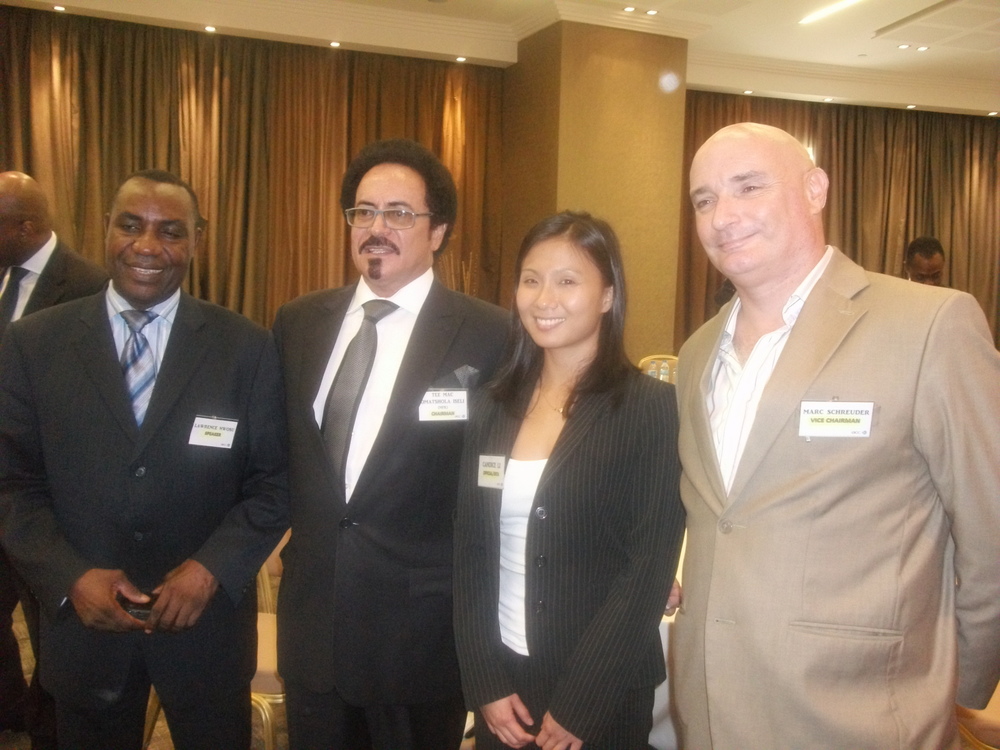
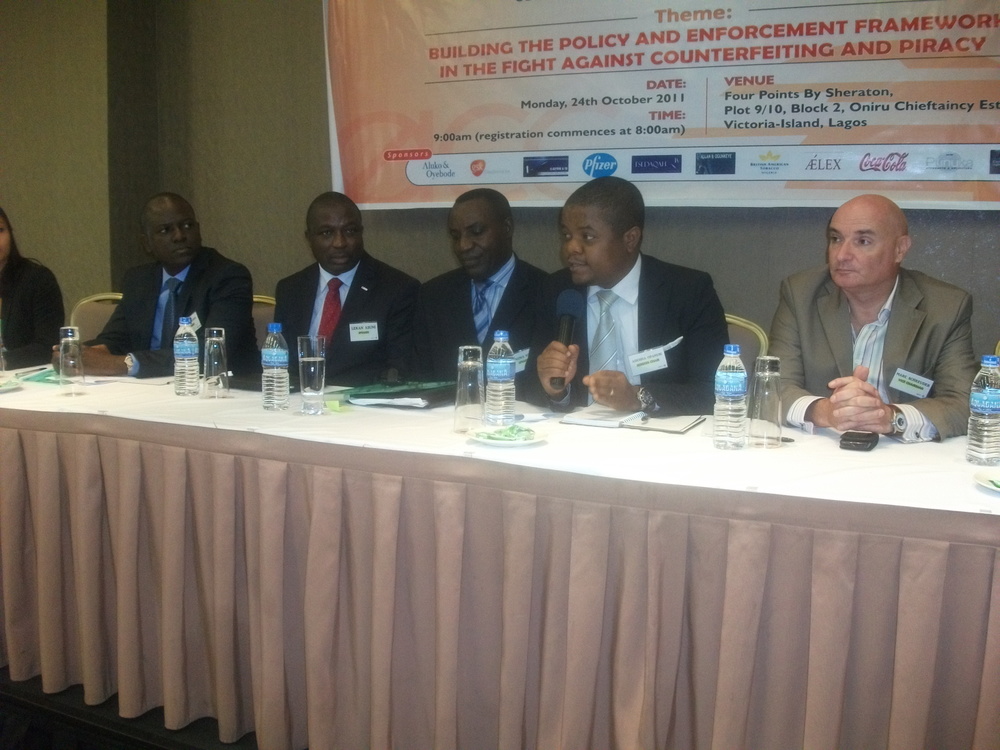
The Anti-counterfeiting Collaboration, Nigeria (ACC), a non-profit anti-counterfeiting organization, and the International Trademarks Association (INTA) hosted the 2011 ACC/INTA-ACC Roundtable in Lagos, Nigeria on October 24th, 2011. Sproxil was fortunate to attend the event, which focused on issues concerning intellectual property of brand owners, anti-counterfeiting policies, and law enforcement.
Additionally, the event explored various anti-counterfeiting measures available to brand owners, who, with the assistance of increased government intervention and vigilant consumers, can successfully protect intellectual property and eradicate piracy.

This event was an important reminder that it is only through proactive collaboration of multiple parties – from government to brand owners to consumers – that we can effectively fight against anti-counterfeiting.


According to Aluko & Oyebode, past ACC/INTA-ACC workshops emphasized the importance of public awareness of counterfeiting – a concept wholeheartedly promoted and reinforced by Sproxil.