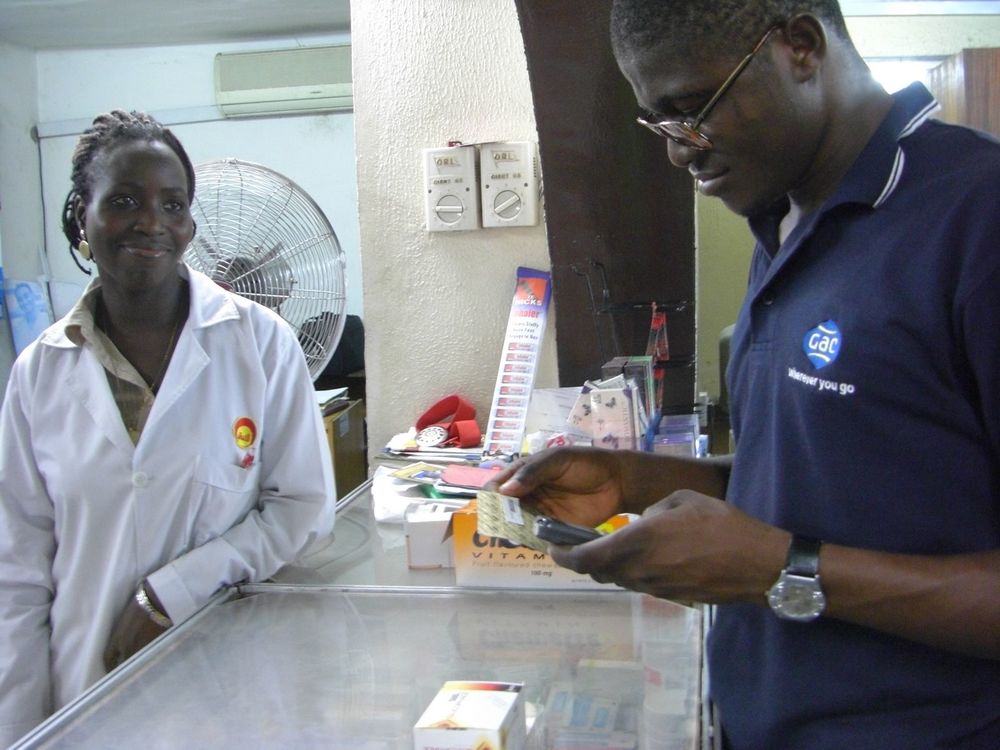
Counterfeit Drugs Are As Dangerous As Terrorists

Counterfeit drugs are being labeled as one of the most dangerous terrorists by Wiltshire C.N. Johnson, the Registrar of the Pharmacy Board of Sierra Leone. He said that counterfeit drugs are responsible for many deaths of people in the society. According to estimates by the World Health Organization (WHO), up to 30% of medications on the market in developing countries such as Africa are counterfeit. Counterfeit medicines are deliberately and fraudulently mislabeled with respect to identity and/or sources. They are typically designed to fool buyers by using misleading packaging and mimicking the shape, color, size and imprints of genuine drugs.
Counterfeit medicines pose a significant public health risk. They can lead to treatment failure, organ dysfunction and damage, worsening chronic disease condition and can cause early death. The intake of fake drugs has an adverse effect on the immune system as well. This affects the recovery of a patient from the disease process. Johnson told journalists at a symposium held at the conference room of the Sierra Leone Association of Journalists in Freetown that drugs counterfeiting was not a new phenomenon, noting that “it is a murder perpetuated by faceless money makers.”

Globally, there is ample evidence of the presence of organized criminal networks in counterfeit pharmaceutical trafficking. Johnson claimed that drugs counterfeiting was a corporate global network and that people sell them because they want to make money. “The fight against drugs counterfeiting should not be left in the hands of the pharmacy board alone but needs the cooperation of everyone,” he noted.

In 2010, the illegal market in counterfeit medicines alone is expected to raise approximately US$75 billion in revenues for smugglers. This represents an increase of 92% compared to 2005. In some African and Asian countries reports are that up to 90% of medicines are counterfeit. The loss of life resulting directly and indirectly from the proliferation of counterfeit pharmaceuticals has already taken on huge proportions. The time to intervene is now. Every day counts in this battle against these killers.

Counterfeit Drugs and Malaria Resistance

Counterfeit drugs, including fake, substandard, adulterated or falsely labeled medicines, have become a growing threat to global health. The problem is especially serious in developing countries. Thousands of people die from ineffective medicines and millions more from the drug resistant strains of pathogens. A 2009 report from the International Policy Network revealed that fake tuberculosis and malaria drugs alone may kill about 700,000 people a year.
Perhaps the greatest single widespread disease being boosted by the presence of fake drugs is malaria. A 2006 study published in the American Journal of Tropical Medicine and Hygiene found that 68 percent of anti-malaria drugs found in Laos, Myanmar, Vietnam and Cambodia did not contain the correct amount of active ingredient. Malaria claims a child’s life every thirty seconds and over a million lives annually but the WHO estimates that 200,000 of those deaths could be prevented if all anti-malarials were genuine.

Counterfeit malaria drugs are contributing to a growing resistance to the treatment of disease. Many drugs are cheaply made and do not contain the right chemistry or are stored at incorrect temperatures. Some of them are deliberate fakes that have authentic looking pills and packaging but contain only a small percentage of the active ingredient in each pill. Resistance to a drug develops when the pathogen is exposed to low levels or incorrect doses of a medication.

Counterfeit drug makers have learned to thwart the system by adding minimal levels of active ingredients so that quality screening tests reveal a false positive.  These types of counterfeits are ineffective at killing the parasite infection and increase the likelihood of mutation and resistance. People in Cambodia are unknowingly using improper drugs and fake drugs which create resistance. This is causing the death of growing numbers of Cambodians from malaria even while taking anti-malarial medicines.

A recent study conducted a quality assessment test of available anti-malarials in six urban or rural settings in southeast Nigeria. Thirty seven percent of the tested drugs did not meet USP standards. Furthermore, this study implied that drug quality in rural settings was significantly worse than in urban settings, with 66% of quinine medications were substandard as compared to 43%, respectively. This suggests that the poor socio-economic groups often receive the lowest quality of treatment, perpetuating a cycle of poverty in endemic areas.

Counterfeit drugs are a major barrier to combating malaria throughout the underdeveloped world. Consumers can only protect themselves by paying attention to the drugs they take. The idea is to closely examine drugs, use available anti-counterfeiting solutions and report anything suspicious to appropriate authorities.


Sproxil: At the Intersection of Pharmaceuticals and Technology

Every day in some parts of the world, consumers have to face a key decision point. “Should I go for the red shoes or the blue ones? Wait for next year’s model, or go for that new car next week?” In many developing nations, consumers often have to deal with this decision too: “Which anti-malarial will cure (and not kill) my toddler?”…

See more here and catch our mention on helping solve the pharmaceutical cargo theft and diversion problem here.

Unite For Sight features Sproxil in Case Study

Sproxil has just been recognized by Unite For Sight, a leading NGO that has provided high-quality eye care to 1,000,000 medically underserved persons so far. To the admiration of many, Unite For Sight has far exceeded its original goal of bringing affordable healthcare to deprived communities, and now shares its experience on how to make significant impact in Global Health with the next generation of social impact drivers. We hold their work in high regard, that’s why we decided to participate in their annual Global Health/Innovate conference last quarter.
As part of their programs, Unite For Sight operates a Global Health University with many resources available through their website for free. Unite For Sight’s Global Health University prepares young and bright minds towards making an impact in society by addressing healthcare concerns. With the appropriate support ecosystem, such passionate change drivers can become tomorrow’s global leaders. If you take a look at the Clinic Challenges in Resource-Poor Settings Online Course you will see the Sproxil case study.

We continue to work with highly reputable independent organizations to assess our impact and we’ll keep you posted – we’ve got some good stuff coming this quarter.

Sproxil on the US Chamber of Commerce Blog


Catch our CEO on the U.S. Chamber of Commerce blog Chamber Post, with an introduction from Dr. Mark Esper, Executive Vice President, Global Intellectual Property Center, U.S. Chamber of Commerce.

Dr. Esper notes:

Fortunately, the Obama Administration is working on America’s first-ever National IP Enforcement Strategy that has the potential to crack down on the counterfeiting and piracy that harms consumers, kills jobs, and impedes our economic resurgence. Enhancing our IP enforcement efforts is not only a bipartisan issue that enjoys enormous support on Capitol Hill, but it is also a critical factor in the country’s future that is endorsed by both business and labor. We look forward to learning more about the Obama Administration’s strategy to protect consumers and grow our economy when this plan is released in the coming weeks.

NAFDAC Proof of Concept Results Online


We are pleased to announce the results of NAFDAC’s use of cell phones to fight fake drugs in Nigeria. We had a successful 100-day pilot and we’re now ready to scale up! If you are interested in the results, you may download the document here.

Update:

See the reaction from key industry voices.

In-PharmaTechnologist: “NAFDAC keen on new SMS anti-counterfeit results

SecuringPharma: “Sproxil completes Nigerian text message verification pilot

A Round of Updates


We’ve been very busy at Sproxil lately. NAFDAC’s Mobile Anti-Counterfeiting Service (MAS) keeps growing in popularity. With the addition of Etisalat, a popular mobile network in Nigeria, consumers can now text on any GSM network in the country using the same “911 for fake drugs” number: 38353. We’ve already seen uptake on the Etisalat network – we’re glad to be of value to end consumers. Nigerians can still text through MTN, Glo and Zain as they have been doing over the past several weeks.

For those who have been wondering what kind of reach we have working with some of the largest GSM networks in West Africa, take a look at the data provided by the Nigerian Communications Commission (NCC). As of February 2010, we could reach out to over 67 million users. With Nigeria leading Africa in mobile telephone adoption (4.1 million new users in Q4 2009), we are confident our user base will keep growing strongly.

On the pharmaceutical side, Pharmaceutical Commerce just published an article on Sproxil: Sproxil Inc. offers proof of concept for patient communication in drug authentication.

Vanguard: NAFDAC intercepts fake drugs worth N600m (USD 4m)

NAFDAC has just disclosed that it has located USD 4m in fake drugs destined for Nigeria. This is a big win for Nigeria. The seven trucks loaded with fake medication have been prevented from entering the Nigerian market. In addition to the use of technology to find counterfeits, NAFDAC is also using best practices from the security/intelligence community, as revealed in the Vanguard article. We can also attest to this based on our interactions with NAFDAC.

We keep stressing that technology is an efficiency multiplier. An organization that doesn’t have skilled staff, strong leadership and a focused mission may not gain maximal value from the use of technology. It’s great to see that NAFDAC is proving this point by adopting existing strategies in the intelligence community while enhancing its anti-counterfeiting practices with a portfolio of technologies deployed at different levels in the supply chain. The results are clear.

Chinese Consul-General reportedly blames Nigerian businessmen for fakes

allAfrica.com is reporting that the Chinese Consul-General in Lagos, Mr. Guo Kun, said Nigerian entrepreneurs are making Chinese companies produce sub-standard goods and that the Chinese companies do so because they want the business.
They say that during an official visit by a Chinese People’s Association for Friendship with Foreign Countries (CPAFFC) delegation to strengthen bilateral relationships he said “It is a real problem for a product that is say 10 dollars (about N1500) of standard quality, some of the [Nigerian] entrepreneurs went to China, and asked the host to make it thinner and cheaper. At the very beginning, some of the [Chinese] companies were very reluctant to produce for them. But later, you know they are entrepreneurs, they want to make money. These host factories don’t want to make for them, to produce for them. Finally they [Nigerian entrepreneurs] went to many factories, at least they can find one or two factories to make for them sub-standard goods and they bring it back,” to Nigeria.

This raises the age old question of who is responsible for sub-standard products, is it the illegitimate manufacturer, the importer or both? You can read the original article here.