Beyond Organizational Scale : Sproxil Celebrates Launch Of Schwab Foundation Report

 The world is a better place because of the people who have made it so.  A portion of these people are social entrepreneurs; men and women using the principles of business to run organizations whose goal is improving the quality of life. Social entrepreneurs understand that the world is a network of complicated systems interacting with each other to give the results that many accept as reality. For many, the need to improve this reality is what inspires what they do, so they study, analyze and integrate themselves into the system to begin to influence it. 
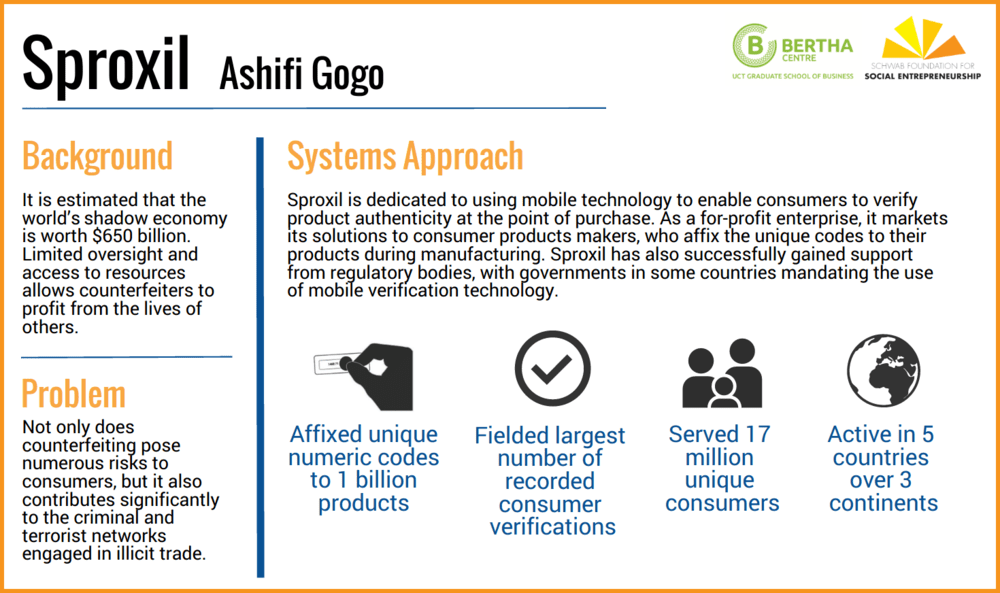
The process of influencing systems is often riddled with bureaucracy, cultural resistance, and outright antagonism. Sometimes they start to see results, real life validation that the work they do is veritably changing an element of the system. Naturally following this is the desire to scale operations; geographically for example, so that more people can benefit from the solution, thus increasing its impact. However, in some cases that will never be enough. And while their organizations might be thriving by strict business definitions, the frustration that comes with this realization always leaves more to be desired.

Confronting the complicated and often resistant systems that stand in the way of social impact is difficult enough, but some social entrepreneurs are taking an even more subversive approach: seeking to change the system itself. Rather than brainstorming solutions that are scalable organizationally, these social change agents look at how their solutions can be structured to achieve systemic scale. It begins with a reorientation so fundamental that it sometimes requires a reworking of the business model itself or establishment of a whole new organization to address the problem.

In 2010 when Sproxil introduced its anti-counterfeiting solution to Nigeria, a pilot was run with Biofem, a leading pharmaceutical distributor. The results were so good that the Nigerian government didn’t only endorse the solution but implemented legislation that compelled manufacturers or distributors of certain pharmaceutical products to adopt the technology. 
If these results were scaled to cover the rest of the world, for instance, the pharmaceutical industry would be secure. However, even a cursory look at the number of products which can lead to fatal outcomes if their counterfeits are ingested still show millions of consumer products largely uncovered, not to mention the economic loss to brands. 

Even if all governments were as centralized and thus powerful as the Nigerian government, they could not compel every manufacturer to adopt consumer protection solutions. A new product needed to be created with which Sproxil could engage brands directly, with enough value added to incentivize them positively. With the Sproxil Champion solution, Sproxil can engage manufacturers of other consumer products on a much wider scale and influence the system to ensure a lot of brands can provide authentic products to their customers. This is one among many examples of systems thinking detailed in the Schwab report.

As more social entrepreneurs converge around the idea of ‘systems change’ the Schwab Foundation for Social Entrepreneurship, in collaboration with the Bertha Centre for Social Innovation & Entrepreneurship, UCT  Graduate School of Business, has put together ‘Social Entrepreneurship and Systems Entrepreneurship: From Organizational to Systemic Scale’ an insight report launched on the 2nd of May, to help social entrepreneurs  understand systems change thinking. 

Alongside Sproxil, five other social entrepreneurship from various continents were researched, and their case studies, as well as core lessons from their examples,  are included in the report, which will be very helpful reference material for social entrepreneurs.
Sproxil is honored to have been among the six social enterprises that were the subject of this study. We would like to thank the Schwab Foundation, the Bertha Centre for Social Innovation & Entrepreneurship, and every person who put in the time or lent their expertise to this project. We hope this report inspires you to be systemic in your thinking so that we can generate even more innovative ideas for changing the world on a broader scale.

Sproxil Surpasses 50 Million Consumer Engagement Mark

New Product From Tech Company Helps Consumers and Major Corporations Combat Counterfeiting While Building Brand Equity and Rewarding Loyal Customers

Boston­, MA (15 February 2017) – Sproxil®, a brand engagement specialist for emerging markets, has exceeded 50 million consumer engagements, providing tens of millions of loyal consumers with automatic protection from counterfeit products while securely receiving rewards. Sproxil uses mobile technology to combat counterfeiting and increase brand equity with innovative, consumer-focused product protection and targeted marketing solutions.

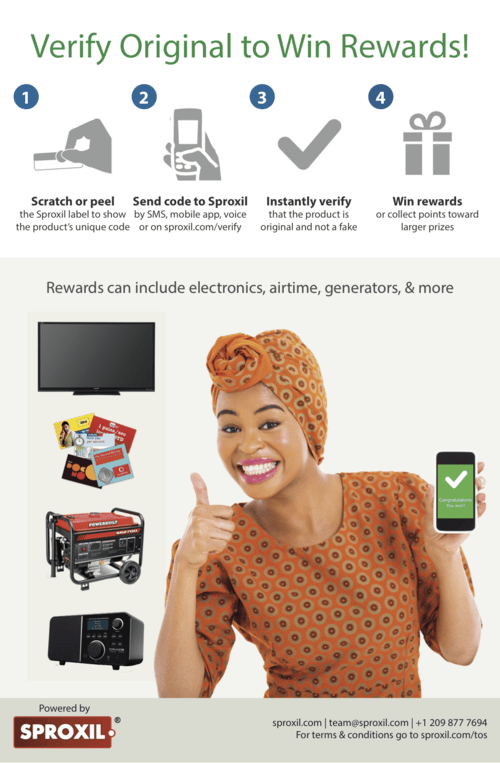
In the last year, Sproxil launched Sproxil Champion, a mobile loyalty program that offers consumers convenient, point-of-sale rewards and built-in fraud protection while helping brands set themselves apart from the competition. The tool, which helps consumers avoid knock-offs and make smarter, data-driven decisions, gained almost immediate traction, accelerating the company’s rate of transactions. Since its launch, Sproxil, with its brand partners, has distributed more than USD 2.5 million in prizes—ranging from a few cents of prepaid cell phone credit to a Mercedes Benz—to loyal consumers who purchase authentic products.

“We have leveraged our success in the pharmaceutical industry to develop new offerings that appeal to all brands across a variety of industries, from clothing to automotive, selling packaged goods in emerging markets,” said Sproxil Founder and CEO Ashifi Gogo. “Our milestone validates the demand for new ways to engage with consumers directly on their mobile phone at the point of sale, while protecting them from counterfeit and diverted products. Sproxil Champion delivers precisely that.”

Large multinational brands in the fast-moving consumer packaged goods industries face complex messaging constraints as they expand to emerging markets. While traditional barriers such as language and cultural differences exist, new threats of counterfeiting and negative brand impact are rapidly emerging as market expansion risks. Cross-border counterfeit and pirated product trade is projected to grow to USD 991 billion in 2022 from USD 461 billion in 2013.

Sproxil Champion’s built-in anti-counterfeiting protection enables brands to gather critical crowdsourced supply chain intelligence while maintaining a covert anti-counterfeit program. “As a result of signing on to our Sproxil Champion program, multinational brands have grown sales, regained market share, rewarded tens of millions of their customers and collected opt-in consumer profile data that has driven their future marketing strategy,” said Ashwin Dhumal, Sproxil’s Regional Sales Director based in Mumbai, India.

“Sproxil has achieved impressive scale in a short period with service in more than eight countries, covering products ranging from life-saving antibiotics to fast-moving consumer products,” said Justus Kilian of Acumen, one of Sproxil’s key investors who helped get the Champion program off the ground. “Our investment in Sproxil has already yielded some of our largest impact numbers, and we look forward to future milestones and strong growth.”

###

About Sproxil

Sproxil® uses mobile technology and a proprietary fraud detection platform to launch secure, data-driven consumer engagement programs globally. Sproxil’s solutions are deployed by multinational manufacturers and brands across multiple industries to prevent supply chain fraud, amplify brand awareness, and optimize marketing spend. With teams of experts in Africa, Asia and America, Sproxil has executed projects across five continents and has the ability to offer services in over 100 countries worldwide. They have earned numerous awards and honors, including the 2009 Clinton Global Initiative Outstanding Commitment Award and named the most innovative healthcare company in the world by Fast Company Magazine, ranking #7 overall. 

Sproxil is the only consumer loyalty and brand protection expert with both ISO 9001 and ISO 27001 certification. For more information and a full list of Sproxil’s product suite, please visit www.sproxil.com

About Acumen

Acumen is changing the way the world tackles poverty by investing in companies, leaders and ideas. We invest patient capital in businesses whose products and services are enabling the poor to transform their lives. Founded by Jacqueline Novogratz in 2001, Acumen has invested more than $106 million in 96 companies across Africa, Latin America, South Asia and the United States. We are also developing a global community of emerging leaders with the knowledge, skills and determination to create a more inclusive world. In 2015, Acumen was named one of Fast Company’s Top 10 Most Innovative Not-for-Profit Companies. Learn more at http://www.acumen.org and on Twitter @Acumen.

###

Contact

Sproxil
Atim Ukoh
atim.ukoh@sproxil.com
+1 209 877 7694

Acumen
Carolyn Bielfeldt, Associate Director of Communications
cbielfeldt@acumen.org
+1 646 747 3968


Loyal Consumer wins Mercedes Benz With Chloride Exide

Sproxil Champion offers brands a chance to engage their customers  by rewarding them as well as ensuring they purchase genuine products regardless of the industry. Chloride Exide took advantage of this unique opportunity and decided to run a campaign to reward their consumers for being loyal. The main prize for the campaign was a brand new Mercedes Benz and was open to all consumers of the Chloride Exide brand in Kenya that verified genuine products. There were also consolation prizes of airtime, fuel cards and cash. 

There were a number of participants in this 3 month campaign which resulted in 65 people winning airtime daily, 13 people winning fuel cards weekly, 3 people winning cash prizes monthly and the grand prize of a mercedes benz that went to one person. The lucky taxi driver Mr Kibe in Kenya scratched and verified a genuine product and won the Mercedes Benz. 

Chloride Exide saw an increase in sales during the three month promotion period as more consumers were engaged with their brand and purchased more products to increase their chances of winning. There was better brand awareness during this period as consumers that were not already customers for this company began purchasing their products for a chance to win. This enabled the company gain additional market share during the promotion period and increased loyalty amongst its consumers. 

Is your company looking to increase sales, increase brand awareness, increase market share all while protecting its consumers from substandard products, then talk to a Sproxil Representative and let us help set you up. Fill out our contact form and someone would get back to you. 


Differentiate your business with Technology

Every business that wants to stand out from the crowd does so with technology in todays world. Whether its a little tweak to your sales process or an internal Human resource tool, more and more businesses are looking to technology to help ease their processes or even provide them with a competitive marketable edge in their industry. 

Imagine in your industry, a wave of counterfeiting has hit like it has in the Nigerian cosmetic space, how does your business stay competitive and protect its consumers? Solutions like the Sproxil Champion product enable businesses fight the issue, stay afloat and infuse technology into their processes for better efficiency. How do we mean? The Sproxil Champion product has two sides to the technology. There is the anti-counterfeiting feature and the loyalty marketing feature.

Take for example a cosmetic company called “X Cosmetics” is facing counterfeiting challenges and is experiencing loss in consumer trust in the product, the Sproxil Champion is a solution that can help bring back that consumer and also possibly bring more consumers in the process. X cosmetics reaches out to Sproxil to install the Champion feature on their product and they agree to reward their customers for purchasing with airtime or physical gifts, this not only serves as a marketing campaign for the product, it also weeds out the counterfeit versions automatically from the market. Consumers will be made aware to look out for the label which means the products without labels do not move in the market. Consumers that probably did not purchase the products previously, see the promotions and want to take part in it. This enables the business regain lost market share, gain new market share, restore confidence in their products and most importantly increase their bottom line. 


Once great branding and hard work has been put behind your product, be rest assured that counterfeiters will want to capitalize on your success. To ensure this is not the case with your brand, contact us to discuss about the Sproxil Champion product

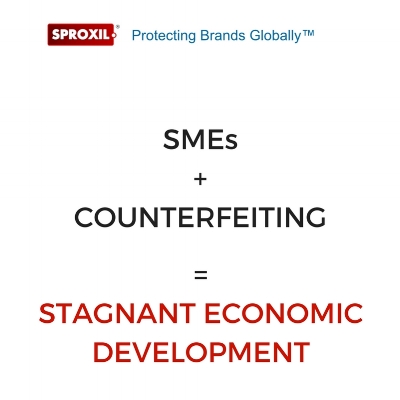
SMEs dealing with counterfeiting

Counterfeiting is not a topic that is limited to large corporations and multinational organizations even small businesses face the wrath of counterfeiters. This is becoming a rising problem especially in developing countries. SMEs are said to be the driving force for economic development so in many developing countries, organizations are providing support in various ways to help boost the success rate of SMEs. 

SMEs garnering all the support possible and implementing proven business models become successful and contribute to the development of the economy in which they function. Unfortunately, with this level of success comes challenges and one of such challenges is counterfeiting. 

Counterfeiters observe the rate at which certain products move in the market and if some are faster than others, they invest in production of those items whether substandard or outright dangerous. That way, they mask the products with the same packaging but different content and distribute. When consumers buy these products and find out its substandard or outright toxic, word of mouth spreads and your brand is damaged.

What happens when SMEs face counterfeiting?

  • Drop in Sales
  • Confidence in your product is lost
  • Company loses market share it worked so hard to gain. 
  • Discouragement of new business initiatives in that economy
  • Loss of employment as company is not generating sufficient income
  • Risk of Health and Safety
  • Loss in tax revenue
  • Ban of local products in foreign markets

How can SMEs deal with Counterfeiting?

– Packaging

Packaging that is not easy to replace is a strategy companies use to avoid counterfeiting. Apart from the fact that the packaging is not easily accessible, frequent package change is encouraged. This may seem like an expensive approach but the investment to keep your business afloat is necessary.

– Loyalty reward campaign

Products like Sproxil Champion enables businesses run loyalty reward campaigns for their consumers. No matter what industry you are in, whether you deal directly with distributors or end users, rewarding your customer is always a differentiating factor. Counterfeiters are not able to implement these rewards and the Sproxil Champion technology is immediately able to detect and provide intelligence information to businesses about where their products are being counterfeited because they have tried to fake the loyalty reward and our system detects it. This product also works post counterfeiting in the minds of the consumers as the business is able to draw them in with rewards and potentially expand their market share.

– Brand Protection solution

Brand protection labels like the Sproxil Defender is another solution that businesses can take advantage of. You place a label on your product and consumers can scratch and text to verify the authenticity of the product. This builds trust in your brand and eventually weeds out counterfeiters and discourages them from faking your products in the future. 

It is important to note that you would always need to stay ahead of the market to avoid counterfeiting in your business. The effects of counterfeiting in a developing economy are dangerous and whatever solution would be best to eradicate this problem must be implemented to discourage the industry of counterfeiting. 


Niger Delta Development Forum 2016

According to their website, the Niger Delta Development Forum “envisions a Niger Delta where all persons are able to live sustainable livelihoods, generate income and employment, and create economic opportunities unhindered by constraints from within and outside the market system in the region and beyond.”

The NDDF is not just talking about it, they have been taking strides to ensure that adequate structures are put in place to make their vision a reality. One of such strides is their annual conference home and abroad hosted in several regions to facilitate discussions, share ideas and look for creative ways to execute the ideas shared. 

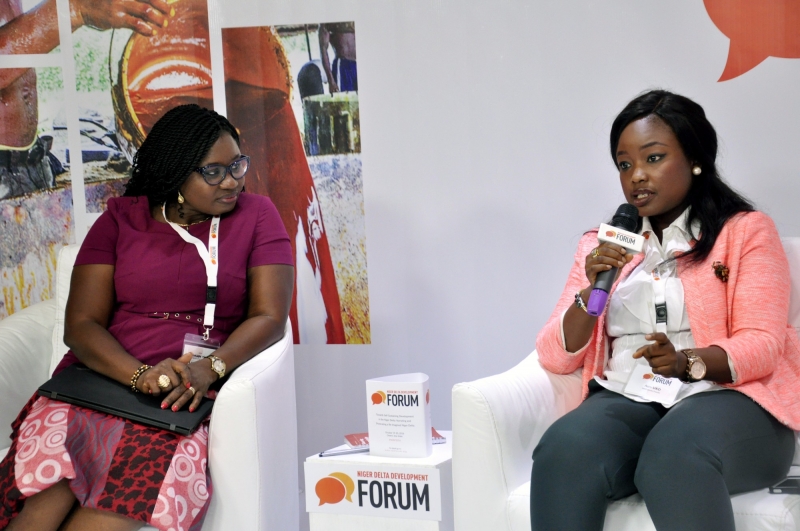
Key stakeholders from the region and partner organizations are invited to attend this event to share creative solutions to the problems in the Niger Delta region in Nigeria. The theme this year was  focused “Towards Self-Sustaining Development in the Niger Delta: Narrating and Showcasing a Re-Imagined Niger Delta” A representative of Sproxil was invited to speak on the topic “Economic Diversification and the Digital Economy.” 

Atim Ukoh, who handles the marketing communications for Sproxil spoke extensively on how the Niger Delta could benefit from the Sproxil solution. Citing examples of Sproxil projects in other parts of Africa, stakeholders were convinced that the purposeful inclusion of technology early on in the process of diversifying the economy would make their approach more targeted and yield more efficient results. 

Great ideas were generated and new relationships were built. We are glad that Sproxil would be included in the beginning processes of developing the Niger Delta economy of Nigeria beyond Oil. For more information about the event, check out the NDDF website.

Check out some images from the event as seen on the NDDF site.


How to Boost End of Year Sales with Loyalty Marketing

The ember months are upon us and these are the months that are notorious for consumer spending. Maybe your sales plateaued in the summer months and you are looking to boost sales again during the ember months. What is your company doing to make this happen? Has your company drafted a campaign strategy to ensure consumers are spending on your products and not the competition? How does your organization distinguish their brand within this frenzy? Ensuring your products are in hampers are great but offering consumers a little more will certainly get their attention during this period. 

First you would need to define the objectives for your company and to do this you would need to take into account the current economic situation in your country. What are the current spending habits? What are the trends your company can capitalize on? These questions and many more would help you define realistic objectives and set realistic goals. 

After analyzing your current situation, defining the strategy that would best serve your target market is the next step. Is your company trying to raise brand awareness at this point or just trying to clear the inventory in the warehouse? These goals would determine the strategy of the marketing. For example, if you are trying to clear inventory, you may want to offer a 2 for 1 pricing strategy to get consumers to buy the products off the shelf and possibly clear your warehouse. 

The next step would be to decide on the best tactics to use to achieve the objectives for boosting end of year sales. As mentioned in the earlier example, you may decide to offer consumers a 2 for 1 pricing model and advertise this on radio, TV or online. Your strategy could be to reward consumers with airtime when they purchase your products in which case you can purchase labels to reward consumers using the Sproxil Champion program. That way consumers can be instantly rewarded with airtime straight to their mobile phones. These are some tactics to apply to win consumers loyalty during this end of year marketing frenzy period. 

The end of year marketing plan on your end needs to be solid to achieve positive results. What plans have you made so far? Have you made plans in the past? Did they work for you?


E-Commerce Sites and Counterfeiting

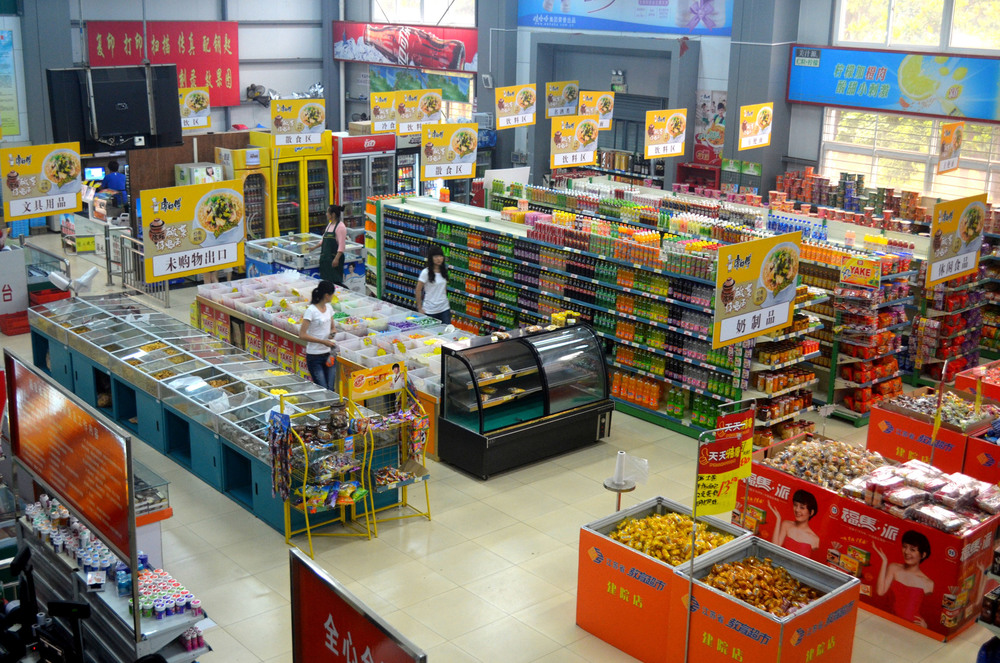
The correlation between e-commerce sites and counterfeiting has become more pronounced in more recent times. Big name websites like Alibaba.com are constantly looking for creative ways to eliminate counterfeiting from their platform. While this is a step in the right direction, it is also proving difficult for other smaller e-commerce sites that do not have adequate resources to fight counterfeiting.

Counterfeiters have also taken things to a new level to create products that do not exist within a company’s brand portfolio but they use the company name anyway. Majority of FMCG brands suffer this fate. Due to their diverse portfolio of products in different countries, Counterfeiters take advantage of FMCG brands by creating a new product line which they can argue is not necessarily a substandard product after all they are expanding their service offering. This is however counterfeiting nonetheless as this is using a brand name to market their product. 

How can E-commerce sites tackle this issue?

Strong partnership with brand owners

A partnership with brand owners enables e-commerce sites identify their official distribution channels. This enables the e-commerce sites weed out any unauthorized re-seller so they would not be allowed to upload their listings on the website. It would be advisable for anyone willing to sell another company’s products on the e-commerce websites to obtain permission from the brand owner and the signed document should be uploaded to the platform to verify the authenticity of the seller.

Consumer Awareness

E-Commerce sites have a responsibility to constantly educate consumers about being conscious of their purchases from the website. There needs to be effective follow-up strategy for consumers who purchase a product from the site that is counterfeit. The e-commerce website can partner with authorities to track the seller and hold them accountable. 

Enforcement

Partnership with regulatory and law enforcement authorities will go a long way in enabling e-commerce sites put an end to distribution of counterfeit products on their site. Once an example is made of a few counterfeiters, the rest would be discouraged from using the platform. Once a counterfeiter is identified, they should be traced with the information provided during their registration and punished according to the law of the jurisdiction they are part of. 

It is important for e-commerce business both existing and future to remain accountable and socially responsible even within the business realm as the lives of individuals are at the mercy of the their websites. 


How Loyalty Marketing Helps Your Business

Loyalty marketing is a term that has come to stay in the business world in recent times. How can you reward your consumers for being loyal to your products? Why should you even reward them? They need the products don’t they? Even necessity products have competition. Water is necessary for survival. So many companies manufacture bottled water but there is competition even within that industry. If water company A offers rewards for customers who patronize their brand and water company B keeps communicating just the benefits of drinking water which company do you think would have an increase in sales? Provided both companies offer the same value proposition. I think Water company A would win consumers hearts with their loyalty rewards.

How does Loyalty Marketing help your Business?

Win back customers

For several reasons, your original customers stray and find other products due to a number of issues. The other products may be more cost effective or your company did not invest the resources in looking after these customers when they were purchasing your products. Whatever the case may be, the best way to win back these customers is to run a loyalty marketing campaign. This entices them with the offerings but more importantly, you give them a chance to reconnect with a product they once loved and depending on whether your company has put in the work to improve the product, you would have won their hearts all over again. 

Build a Database of Loyalty

Do you think that company that supply you consumer information have given you enough data about your real consumers? If you run a campaign and have consumers potential and existing purchase your product, you know they were genuinely interested in the product. The information you acquire from running that campaign is more targeted because you know for a fact that these consumers purchased your product. Loyalty campaigns help your company build a targeted database and you can always approach these consumers when your company is launching a new product or you want to get real market feedback.

There are many other reasons why loyalty campaigns are useful for your business. It helps you build customer lifetime value amongst other things. Has your company run a loyalty campaign before?


Three Ways Data can improve Marketing Effectiveness

If you are plugged in, you would have heard by now that data can improve marketing effectiveness. The details may be blurry depending on the environment your business operates in and ease of access to such data. Many companies rely on big data agencies to provide them with information about their consumers. Companies end up spending a fortune to get this information to enable them improve their marketing. How exactly does this help? Does it justify the spend to agencies? Here are three ways data can improve marketing effectiveness.

Market Segmentation

Data enables you break down consumer information into different categories. You can evaluate consumers by age, gender, location, marital status etc and understand why a certain group is purchasing your product versus the group you assumed would make most of the purchases. You have a clearer picture of who your primary and secondary customers are and why. For example, if you are an FMCG brand that specializes in tea production, you may see an increase in sales in green tea because majority of the younger and even older people have been told that green tea is beneficial for detoxing. This helps you plan your merchandise so you can increase stock for your green tea products. This brings us to our next point.

Merchandise Planning

No matter the size of your business, no organization wants to have a full warehouse with products that have not moved for over a month. Data can relieve your company of this burden. As portrayed in my previous example, if the company gathers information that their green tea products are moving faster, they would increase supply of that product and regulate supply for the others to match its demand and that can only be done with data. This also enables the company to switch marketing direction for that product to create more awareness since its moving anyway. 

Customer Loyalty

The price wars that companies get into sometimes sway consumers to try other products. If an organization has done the background work to ensure that their consumers are not easily swayed, then no matter the new price offerings, consumers will remain loyal to a brand. What does this background work involve? Some companies run loyalty marketing campaigns to initially capture the information of the buyer. They then further probe these consumers immediately after the campaign to find out reasons why they bought their product and what exactly they would like to see. If their reasons go beyond pricing and the promotion bait, they take that information and improve their products. So when pricing wars begin, they are not easily swayed because the company that ran the promotion has now tailored the new and improved product to exactly what the customer needs. The customer ends up paying for quality and relevance and is likely to overlook the price to get value for their buck.