Every business that wants to stand out from the crowd does so with technology in todays world. Whether its a little tweak to your sales process or an internal Human resource tool, more and more businesses are looking to technology to help ease their processes or even provide them with a competitive marketable edge in their industry.
Imagine in your industry, a wave of counterfeiting has hit like it has in the Nigerian cosmetic space, how does your business stay competitive and protect its consumers? Solutions like the Sproxil Champion product enable businesses fight the issue, stay afloat and infuse technology into their processes for better efficiency. How do we mean? The Sproxil Champion product has two sides to the technology. There is the anti-counterfeiting feature and the loyalty marketing feature.
Take for example a cosmetic company called “X Cosmetics” is facing counterfeiting challenges and is experiencing loss in consumer trust in the product, the Sproxil Champion is a solution that can help bring back that consumer and also possibly bring more consumers in the process. X cosmetics reaches out to Sproxil to install the Champion feature on their product and they agree to reward their customers for purchasing with airtime or physical gifts, this not only serves as a marketing campaign for the product, it also weeds out the counterfeit versions automatically from the market. Consumers will be made aware to look out for the label which means the products without labels do not move in the market. Consumers that probably did not purchase the products previously, see the promotions and want to take part in it. This enables the business regain lost market share, gain new market share, restore confidence in their products and most importantly increase their bottom line.
Once great branding and hard work has been put behind your product, be rest assured that counterfeiters will want to capitalize on your success. To ensure this is not the case with your brand, contact us to discuss about the Sproxil Champion product.
Counterfeiting is not a topic that is limited to large corporations and multinational organizations even small businesses face the wrath of counterfeiters. This is becoming a rising problem especially in developing countries. SMEs are said to be the driving force for economic development so in many developing countries, organizations are providing support in various ways to help boost the success rate of SMEs.
SMEs garnering all the support possible and implementing proven business models become successful and contribute to the development of the economy in which they function. Unfortunately, with this level of success comes challenges and one of such challenges is counterfeiting.
Counterfeiters observe the rate at which certain products move in the market and if some are faster than others, they invest in production of those items whether substandard or outright dangerous. That way, they mask the products with the same packaging but different content and distribute. When consumers buy these products and find out its substandard or outright toxic, word of mouth spreads and your brand is damaged.
What happens when SMEs face counterfeiting?
Drop in Sales
Confidence in your product is lost
Company loses market share it worked so hard to gain.
Discouragement of new business initiatives in that economy
Loss of employment as company is not generating sufficient income
Risk of Health and Safety
Loss in tax revenue
Ban of local products in foreign markets
How can SMEs deal with Counterfeiting?
– Packaging
Packaging that is not easy to replace is a strategy companies use to avoid counterfeiting. Apart from the fact that the packaging is not easily accessible, frequent package change is encouraged. This may seem like an expensive approach but the investment to keep your business afloat is necessary.
– Loyalty reward campaign
Products like Sproxil Champion enables businesses run loyalty reward campaigns for their consumers. No matter what industry you are in, whether you deal directly with distributors or end users, rewarding your customer is always a differentiating factor. Counterfeiters are not able to implement these rewards and the Sproxil Champion technology is immediately able to detect and provide intelligence information to businesses about where their products are being counterfeited because they have tried to fake the loyalty reward and our system detects it. This product also works post counterfeiting in the minds of the consumers as the business is able to draw them in with rewards and potentially expand their market share.
– Brand Protection solution
Brand protection labels like the Sproxil Defender is another solution that businesses can take advantage of. You place a label on your product and consumers can scratch and text to verify the authenticity of the product. This builds trust in your brand and eventually weeds out counterfeiters and discourages them from faking your products in the future.
It is important to note that you would always need to stay ahead of the market to avoid counterfeiting in your business. The effects of counterfeiting in a developing economy are dangerous and whatever solution would be best to eradicate this problem must be implemented to discourage the industry of counterfeiting.
The correlation between e-commerce sites and counterfeiting has become more pronounced in more recent times. Big name websites like Alibaba.com are constantly looking for creative ways to eliminate counterfeiting from their platform. While this is a step in the right direction, it is also proving difficult for other smaller e-commerce sites that do not have adequate resources to fight counterfeiting.
Counterfeiters have also taken things to a new level to create products that do not exist within a company’s brand portfolio but they use the company name anyway. Majority of FMCG brands suffer this fate. Due to their diverse portfolio of products in different countries, Counterfeiters take advantage of FMCG brands by creating a new product line which they can argue is not necessarily a substandard product after all they are expanding their service offering. This is however counterfeiting nonetheless as this is using a brand name to market their product.
How can E-commerce sites tackle this issue?
Strong partnership with brand owners
A partnership with brand owners enables e-commerce sites identify their official distribution channels. This enables the e-commerce sites weed out any unauthorized re-seller so they would not be allowed to upload their listings on the website. It would be advisable for anyone willing to sell another company’s products on the e-commerce websites to obtain permission from the brand owner and the signed document should be uploaded to the platform to verify the authenticity of the seller.
Consumer Awareness
E-Commerce sites have a responsibility to constantly educate consumers about being conscious of their purchases from the website. There needs to be effective follow-up strategy for consumers who purchase a product from the site that is counterfeit. The e-commerce website can partner with authorities to track the seller and hold them accountable.
Enforcement
Partnership with regulatory and law enforcement authorities will go a long way in enabling e-commerce sites put an end to distribution of counterfeit products on their site. Once an example is made of a few counterfeiters, the rest would be discouraged from using the platform. Once a counterfeiter is identified, they should be traced with the information provided during their registration and punished according to the law of the jurisdiction they are part of.
It is important for e-commerce business both existing and future to remain accountable and socially responsible even within the business realm as the lives of individuals are at the mercy of the their websites.
E-bay, Etsy, Facebook, Pinterest and Alibaba have all been victims of counterfeiters in the past few years. With each passing day, it has gotten more difficult to fight off these counterfeiters but these digital media channels are refusing to give up so easily. Not only are these large corporations the victims, the end users also fall prey to these counterfeit products because of the trust relationship they have with these corporations. There have been a few news articles highlighting the effect of counterfeiting on some of these huge media channels as seen below;
The potential risks of counterfeiters attacking digital media channels are numerous. These large corporations are constantly seeking out creative solutions to combat this problem as it is becoming detrimental to their business. Some of the risks that these companies face include;
Additional resource allocation to combat counterfeiters
More funds spent to support the resource allocation
Reputation damage
Stock prices for each channel dropping
Additional legal resources required to sue the criminals
Decline in trust from the end-users
How can these large corporations combat counterfeiting?
For a company that is in control of the products, supply chain, distribution channels and retailers, counterfeiting is easier to combat. However, for a corporation that is not able to monitor every single activity of it’s users, details get tricky. It is not impossible to do but it is very time and resource consuming to. However time consuming, it is a necessary step that must be taken in today’s online world to combat counterfeiting. Some action items a corporation can consider implementing are;
Define the problem – This is a very important step many companies eliminate from their process. It is important to identify the gravity of the issue at hand and the extent of the damage before recommending probable solutions.
Build an anti-counterfeiting team – Whether your team is built internally or externally, it is important to have one. Companies would efficiently solve this issue if they outsource the help initially while training an internal team to be better equipped.
Identify the list of perpetrators – There would be popular websites that counterfeiters use to sell their goods and it is important to identify those links and prevent access to those websites. Pinterest already does a great job of protecting their users by preventing access to those websites.
Block Access – After the list of perpetrators have been identified, prevent your end users from accessing those websites and also report those sites to the appropriate governing bodies. For example, the StopFraud.gov website is a great tool to use.
Communicate – It is important to communicate to your strategic partners and end users what the situation is at hand. For strategic partner relationships, especially with other companies that sell goods through your website, you can recommend some anti-counterfeiting solutions to them. Depending on the products they have, Sproxil and a host of other solutions may be ideal for your partners. For your end users, draft up posts that notify them or emails stating the work you are doing to combat counterfeiting on your website. Inform them of steps they should also take to protect themselves.
Finally, keep up with the trends and discussions on how other large corporations are fighting anti-counterfeiting. If your company whether large or small is facing a counterfeiting problem, email us at team@sproxil.com to speak to one of our consultants and we can discuss the best solution for your corporation.
Counterfeiting is a global problem that has been detrimental (even devastating) to man, yet strangely beneficial to others. Yet when many think about counterfeiting, they see it as a group of villains producing and selling fake purses, DVDs, medicine, and even car parts. Many do not know how pervasive and complex the problem is beyond the usual suspects of fake goods. To illustrate that, we are highlighting eight facts about counterfeiting
Facts about Counterfeiting
1 There’s a counterfeit Disneyland
The “Beijing Shijingshan Amusement Park” opened its doors in 1986 with the tagline: “Disneyland is too far.” With very similar structures and offerings to Disneyland, the park faced some legal issues with copyright infringement. Despite the battle, its popularity has allowed them to expand their amusement park over the years.
China has made incredible strides to replicate famous cities around the world, even hiring architects from . From Paris to Manhattan, counterfeiting has never seemed so physically large-scale than this. Source: Business Insider
3 More is not better than less
Counterfeit medicines are criticized for not containing enough or any of an active ingredient (the piece that makes medicines work). But sometimes the opposite issue occurs. In 2009 in China, an Anti-diabetic traditional medicine, which was used to lower blood sugar, was found to contain six times the normal dose of glibenclamide. As a result of this, two people died and nine people were hospitalized. Source: SciDev.net
4 Counterfeiting happens in the U.S. too
Developing markets around the world are often the target for counterfeiting; limited governmental oversight and resources make counterfeiting a very prevalent issue in many of these countries. But many don’t realize that no place in the world is immune to fakes. In the United States in 2014, 75,836 cases were reported to the U.S. Sentencing Commission and of these cases, 478 involved counterfeiting. Think it’s not a problem? Think again. Source: United States Sentencing Commission
5 Even legitimate brands copy
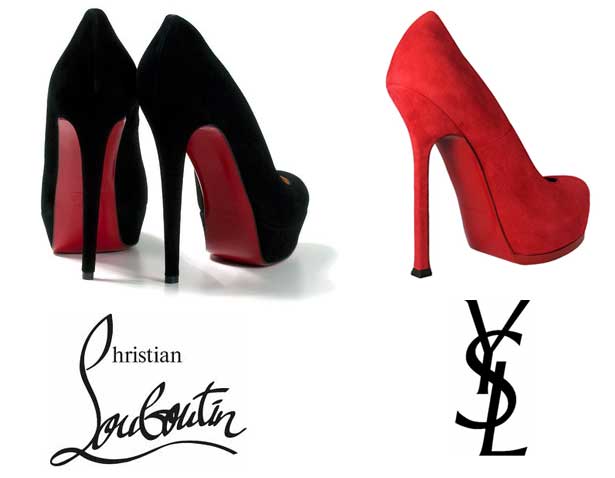
Between 2011 and 2012, famed luxury shoemaker Christian Louboutin won a legal battle against luxury brand Yves Saint Laurent over the trademark of its red-soled shoes. Going forward, any shoemaker that desires to paint red on the soles of their shoes has to pay permission rights to Christian Louboutin. Source: Cnbc
Many high quality medicines come from India, who is the world’s largest manufacturer of generic drugs. That esteemed title also makes it a hotbed for counterfeiting. “[The country] may have as much as 12 percent to 25 percent of their supply contaminated with substandard and counterfeit medicines, and up to 40% of the drug supply in some African nations may contain counterfeits.” Source: lilly.com
7 Buying counterfeits supports bad people
Fake products are not just bad because they can harm you, but they can fuel larger organizations whose profits go toward dangerous causes. “Recovered Al Qaida terrorist training manuals revealed that the organization recommends the sale of fake goods as one means to raise funds to support terrorist operations. John von Radowitz, Fake Internet Goods ‘Linked to Terrorists’, Press Association, June 25, 2002. This same article noted that Hezbollah traffics in counterfeit pharmaceuticals. John von Radowitz, Fake Internet Goods ‘Linked to Terrorists’, Press Association, June 25, 2002.” Source: Facts on Fakes
8 You can even fake history
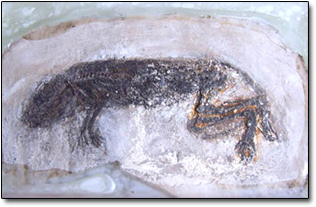
Museums, the History Channel and the National Geographic Channel have done a great job educating us about our history, fossils, living and extinct animals, and entire ancient civilizations and ways of life. Archaeologists work hard to uncover precious and rare fossils, but their work was undermined by the black market. In 1970, the Chinese fossil market took off and the artifacts were sold country-wide until they ran out. They then decided that making their own fossils could be a lucrative business. Today, China is the biggest counterfeit supplier of fossils in the world. The picture below shows a fake rat fossil made from calcified fish. Source: Cracked.com





 Blog
Blog 
